
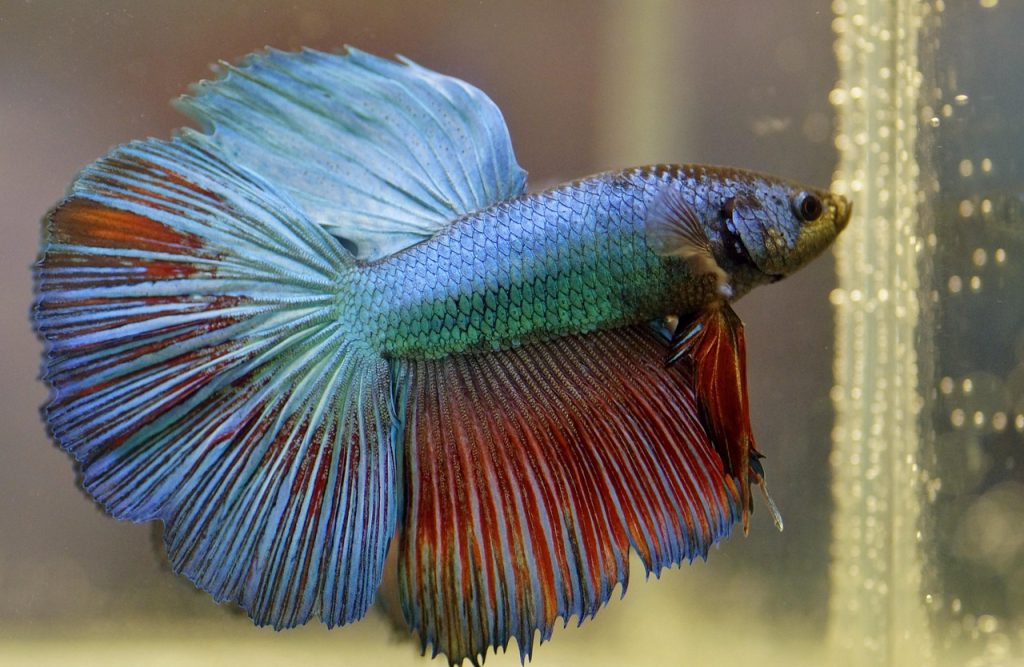
Hello Yuin betta fighters! Witnessing the beauty of a betta fish’s fins fully flared in the aquarium is certainly a special satisfaction for us hobbyists. However, how does it feel when you wake up tomorrow to find your beloved fish’s fins suddenly torn, tattered, or looking incomplete compared to before? This sight is certainly heartbreaking.
As caring owners, we cannot just stay silent. Damaged betta fins not only ruin their appearance, but they can also become an entry point for various dangerous diseases such as fin rot. In this article by Yuin Betta Fish, we will thoroughly examine the 5 main reasons why betta fish fins can tear and how to prevent them.
1. Sharp or Rough Aquarium Decorations
The most classic cause of torn betta fins is decorative objects inside the tank or aquarium. Many beginners use cheap plastic plants with stiff and sharp leaf edges, or decorative rocks with pointy corners. When betta fish swim actively or get dragged by the current, their wide, delicate fins easily snag and tear the fin tissue.
Solution: Replace sharp decorations with live aquatic plants such as Anubias or Bucephalandra. If you must use plastic plants, choose soft silk types. Always test the decoration by rubbing it against a tissue; if the tissue tears or gets caught, the object is dangerous for your betta.
2. Water Filter or Pump Current That Is Too Strong
In their natural habitat, betta fish are used to living in calm waters such as swamps, rice paddies, or small streams. Therefore, they are not strong swimmers in heavy currents. If you install a hang-on-back filter or air pump with excessive water output, the betta will struggle to swim and constantly crash into the glass walls or decorations, leading to torn fins.
Solution: Use a sponge filter with minimal flow or install a baffle so the water current in the aquarium becomes much calmer and friendlier to the long fins of Halfmoon or Crowntail bettas.
3. Affected by Fin Rot Symptoms
Not all torn fins are caused by physical friction. Often, fin damage starts from a bacterial or fungal infection called fin rot. This infection is usually triggered by poor water quality, infrequent water changes, or rotting leftover food at the bottom of the tank. Initially, the edges of the fins will look blackened or melting, then gradually detach and tear.
Solution: Maintain water cleanliness by performing regular water changes (daily or weekly siphoning). Add a little aquarium salt to help the recovery process of fin tissue damaged by bacteria.
4. Tail Biting
This phenomenon is quite unique and often stresses owners out. Some types of betta fish, especially certain strains that are very active or experiencing mental stress, have a bad habit of biting their own tails. This stress can be caused by cramped spaces, too frequent mirror reflections, or boredom.
Solution: Provide a more enriched environment with a dark background, reduce the frequency of mirror provocation, and ensure the size of the container is adequate so the fish does not feel excessively confined.
5. Placing Fish in the Same Container (The Wrong Community Tank)
Betta fish are solitary and territorial. Keeping a male betta together with other aggressive ornamental fish, or even mixing two bettas in one container without a divider, is a surefire recipe for fights. Other bettas or fin-nipping fish species (such as Tiger Barbs) love to nip at a betta’s beautiful fins.
Solution: Always apply a one-fish-one-tank system (solitary) for adult male bettas, unless you intend to perform closely supervised breeding. Do not mix bettas with fin-nipping fish characters.
Those are the 5 main reasons why betta fish fins can tear along with preventive steps. Remember, prevention is always better than cure. Torn betta fins can actually grow back (regenerate) if cared for with clean, high-nutrient water. Keep monitoring the health of your pet fish with Yuin Betta Fish, and see you in the next interesting article!