
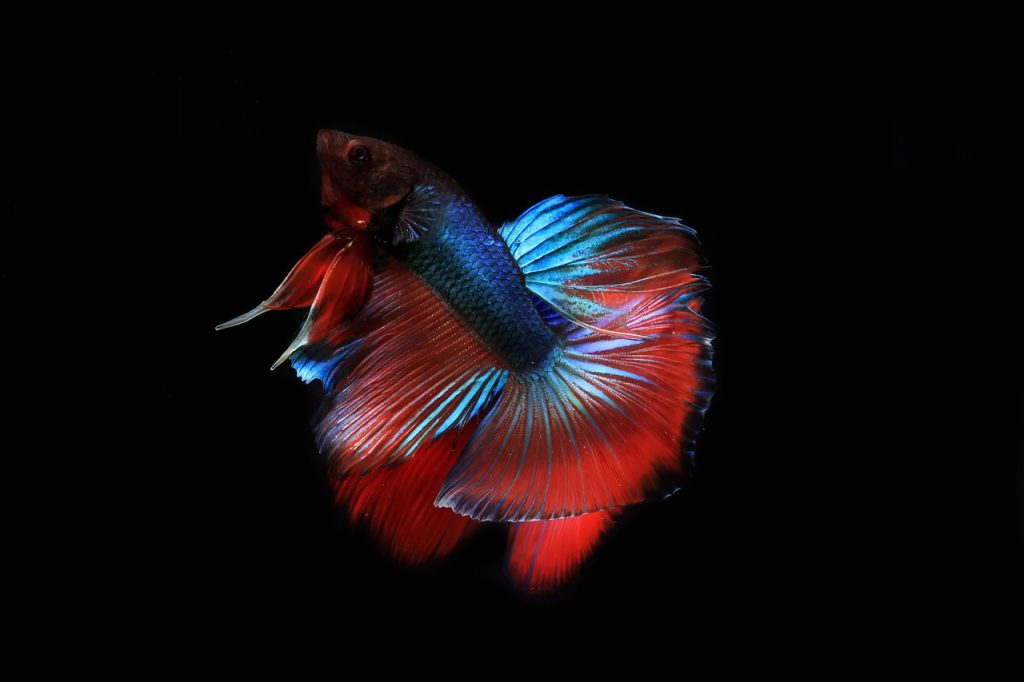
When we talk about betta fish today, our eyes are instantly spoiled by the graceful spread of the Halfmoon’s fins or the vibrant colors of modern Plakat. Yet, there is one variety with spiky, crown-like fins that holds a special place in the history of Indonesian fishkeeping: the Crowntail, more fondly known locally as the cupang Serit.
Many beginner hobbyists assume this unique variety originated in Thailand, a country that has spent centuries as the epicenter of Betta splendens breeding. In reality, history tells a completely different story. The Crowntail is a true masterpiece born from the narrow alleys of Slipi, West Jakarta, crafted through the dedication of local breeders in the late 1990s.
The Humble Beginning: Experiments in the Slipi Betta Village
Entering the mid-1990s, the Slipi and Palmerah areas in West Jakarta were widely known as hubs for freshwater ornamental fish breeding and trading, particularly bettas. At the time, the ornamental betta market was dominated by Veiltail and short-finned fighting bettas (Plakat). Breeders continuously experimented with crossbreeding in pursuit of fin shapes unlike anything seen before.
As the story goes, a local breeder named Ahmad Kawilarang, alongside fellow breeders in Slipi, noticed a genetic anomaly in several of their betta fries. On the caudal, anal, and dorsal fins of these fish, the webbing did not fully cover the fin rays. Instead, the tips of the rays extended outward, creating the illusion of torn or jagged fins.
From Considered Flawed to a Star Known as Serit
Initially, these protruding rays were viewed as a defective product or a deformity caused by fin rot. However, observant breeders saw unprecedented aesthetic potential. The jagged fin pattern resembled traditional hair-combing teeth, which are called serit in Javanese and Sundanese. From there, the local name cupang Serit was born.
Breeders then practiced strict line breeding, crossing individuals with consistent fin webbing reduction until they produced offspring with sturdy, straight, and sharply pointing fin rays. New variations soon emerged, ranging from single ray, double ray, to dramatic crossing patterns (cross ray or king crowntail).
The Leap to the International Stage: The Birth of the Crowntail Name
It didn’t take long for the charm of the cupang Serit to captivate the international community. In the late 1990s, these fish began exporting to Singapore and the United States. One of the key figures who introduced this variety to the Western world was Henry Yin, an exporter and betta enthusiast. Recognizing that its fully flared fins resembled an upside-down royal crown, the term Crowntail was officially introduced to the global community.
The international betta-keeping world was instantly shaken. The International Betta Congress (IBC), the world’s most prestigious betta judging organization, officially recognized the Crowntail as a distinct competition class in the early 2000s. This recognition solidified Indonesia’s massive contribution to the global map of ornamental fish biodiversity.
A Precious Legacy Inspiring a New Generation
The birth of the Crowntail betta proves that the dedication of our local breeders can create global trends that endure across generations. From simple concrete vats and used glass bottles in a corner of Jakarta, a genetic mutation transformed into one of the most respected betta icons in the world.
Every time we watch a graceful Crowntail flare its crown-like fins inside a glass tank, we are not just enjoying the beauty of freshwater fauna. We are witnessing a living piece of history about the creativity, keen eye, and pride of Indonesia’s betta community leaving its mark on the world stage.