Hello Yuin Betta Fish breeders! The world of betta fish breeding never runs out of exciting topics to discuss. One of the most adrenaline-pumping activities for hobbyists is crossing two different varieties. The goal, of course, is to create new color combinations or improve fin spread in the next generation.
In this article, we will take an in-depth look at a case study of crossing a Halfmoon Plakat Red Dragon (HMPK Red Dragon) with a Blue Rim variety. Let’s dissect the genetic potential of both parents and imagine what their offspring will look like in the grow-out tanks.
Understanding Parent Characteristics: Red Dragon vs. Blue Rim
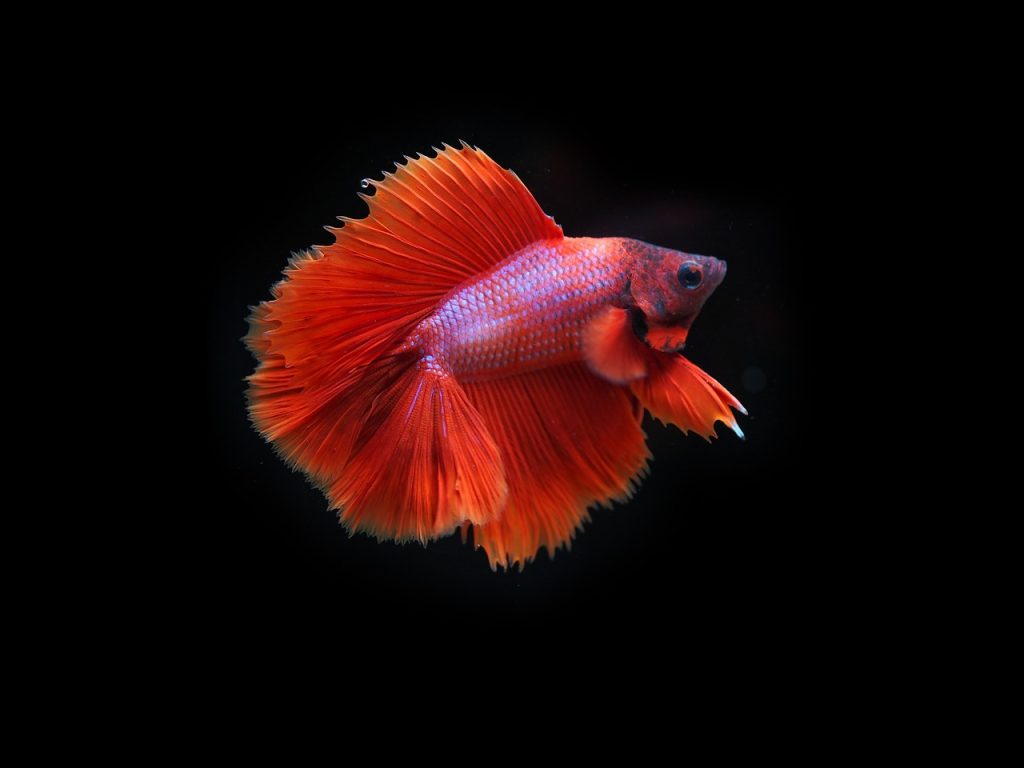
Before mixing the bloodlines of these two varieties, it is crucial to understand the dominant and recessive genes of each fish. Our first parent, the HMPK Red Dragon, is known for its intense, bright red base color with heavy dragon-like scale layering, as well as an aggressive plakat temperament. Its body shape is solid with well-defined dorsal and anal fins.
On the other hand, the second parent, the Blue Rim, holds a distinct appeal with a clean, bright white or light body, characterized by a striking deep blue rim framing its caudal, dorsal, and anal fins. The Blue Rim is a challenging variety to maintain because its color stability is heavily influenced by pure-strain genetics.
Genetic Predictions and F1 (Filial 1) Offspring Results
When you cross a male Red Dragon with a female Blue Rim (or vice versa), what is likely to appear in the first generation or F1 offspring? Following simple betta genetics, the red color in Red Dragons and the deep pigments in Blue Rims each carry their own complexities.
- Color Dominance: The red gene in Red Dragons is usually very strong and tends to mask lighter colors. Therefore, in F1 offspring, red is likely to dominate the fish’s body.
- Fin Shape: Given that both parents possess plakat bloodlines with proportional fins, the F1 generation will generally inherit a sturdy plakat body shape with a strong fighting spirit.
- Pattern Mutation: The blue rim pattern is fundamentally a genetic trait that is quite difficult to retain in a single outcrossing event. In the F1 generation, the blue pattern may not immediately appear as a neat border, but rather modify into spots or novel color gradients.
Next Steps: Moving Toward the F2 Generation
For experienced breeders, the F1 generation from this cross is not the final destination. F1 offspring are typically referred to as “carriers” holding traits from both parents. To achieve your dream results—such as a Red Dragon-bodied fish with blue fin margins (or other unique combinations)—you must proceed to the F2 stage.
At the F2 stage, you can perform inbreeding (breeding siblings from the F1 generation) or backcrossing (breeding an F1 offspring back to one of its original parents). This is where the magic of genetics happens, and unexpected new color variations may emerge right inside your fry jars.
Important Tips Before Starting Your Cross
If you are interested in trying this HMPK Red Dragon and Blue Rim breeding project, keep the following points in mind to maximize your results:
Select mature breeding stock aged at least 4 to 5 months, in prime health and free from physical defects. Also, ensure the spawning container has a stable aeration system and abundant live foods for the female parent after the spawning process is complete.
So, are you up for the challenge in your home fishroom? Don’t forget to keep an eye on quality breeding collections and supplies only at Yuin Betta Fish. See you in the next interesting article!